
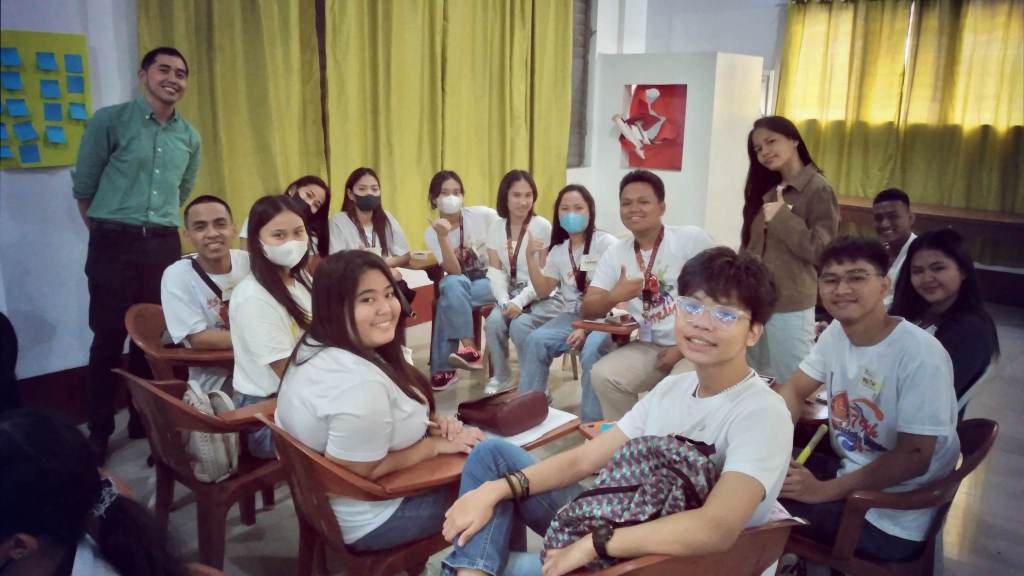
In line with the theme “PAGLAOM”, a Bikol/Bisaya term that means “hope”, Enzo Payonga introduced on Tuesday, January 12, basic concepts of sustainability to senior high school students of the Bicol College Senior High School Department. More than 100 Grade 12 students from the Humanities and Social Sciences (HUMSS) track attended the lecture-workshop, which is part of the culminating activity for the Trends, Networks, and Critical Thinking in the 21st Century Culture (TNCT21) class taught by Mr. Arman Bueno.

Payonga emphasized the value of the interdisciplinary and complex nature of sustainability through a stakeholder simulation exercise. Students took on the roles of stakeholders with various agenda, vested interests, and non-negotiables as regards a hypothetical renewable energy project proposal to be constructed at the foot of Mayon Volcano. Students acknowledged that such an activity made them realize that the pursuit of sustainability is rife with potential tradeoffs and compromises. Payonga explained that such an activity could take hours and he just wanted to give them a feel of how tough it could be, especially in the real world. He had to cut it short before tension and conflict arises! :))


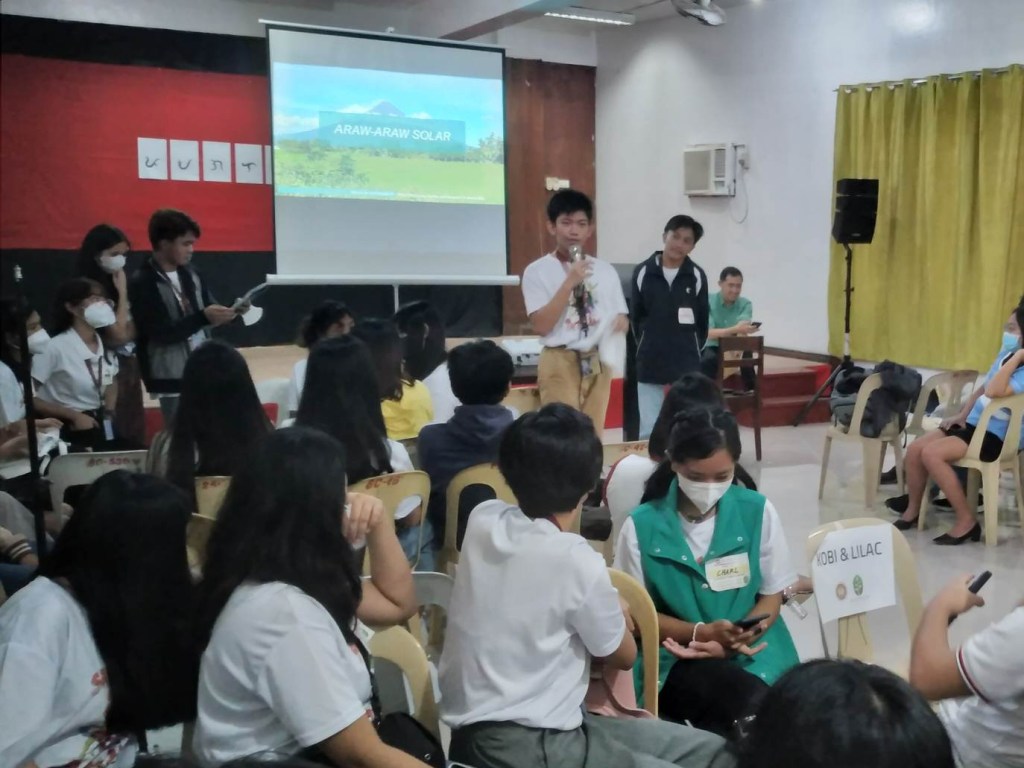
Students take on the roles of stakeholders in a hypothetical renewable energy project. Photos courtesy of Mr. Arman Bueno / Bicol College Senior High School Department.
He then contextualized the simulation activity by talking about the basic concepts of sustainability. While it could be hazy, Payonga shared that sustainability means different things to different people and that it is essential to identify a starting point, be cognizant of what to sustain, for whom, and at what cost. The approach to sustainability is also dependent on the underlying value systems that guide stakeholders and decision-makers. Nonetheless, there is consensus that the overarching aim for the pursuit of sustainability is to ensure that the present needs are met without compromising the ability of future generations to meet their own (UN Brundtland Commission, 1987).
“…sustainability means different things to different people and that it is essential to identify a starting point, be cognizant of what to sustain, for whom, and at what cost.”
If the simulation exercise on determining the fate of a renewable energy project was already hard enough, how much more would achieving the 17 Sustainable Development Goals (SDGs) be! That is why Payonga remarked that he would rather contextualize sustainability through the lens of problems close to home, like energy security (there was a resounding agreement that power interruptions, locally known as “brownouts” are the number one problem in Albay!), so that it would be easier to grasp the enormity of global sustainability problems. Necessary but often conflicting dimensions of these include pursuing economic growth, environmental stewardship, and fulfilling societal needs. Payonga stressed the importance of choosing leaders with the right value systems that can drive a balance among these dimensions, through institutions such as the government.
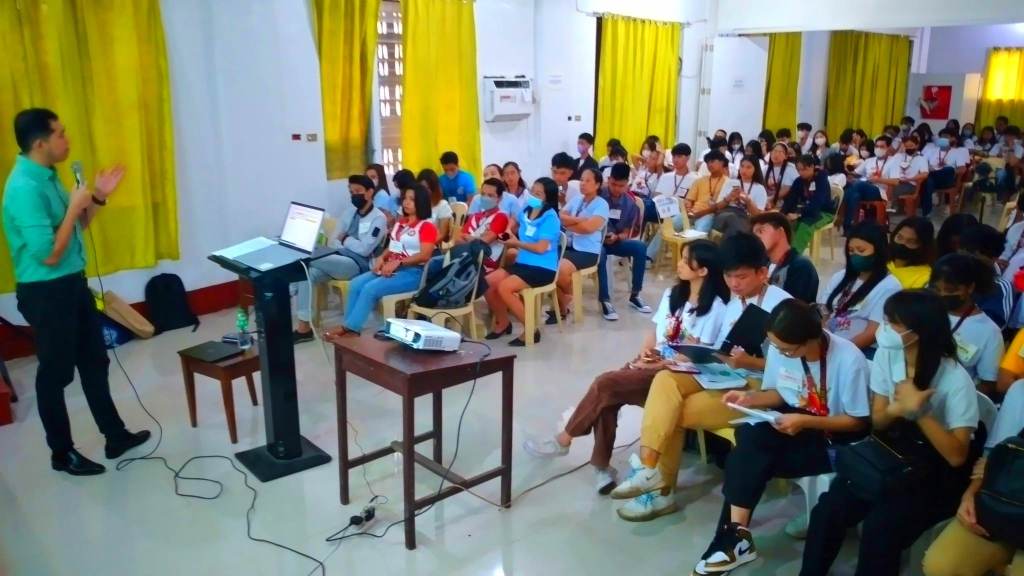
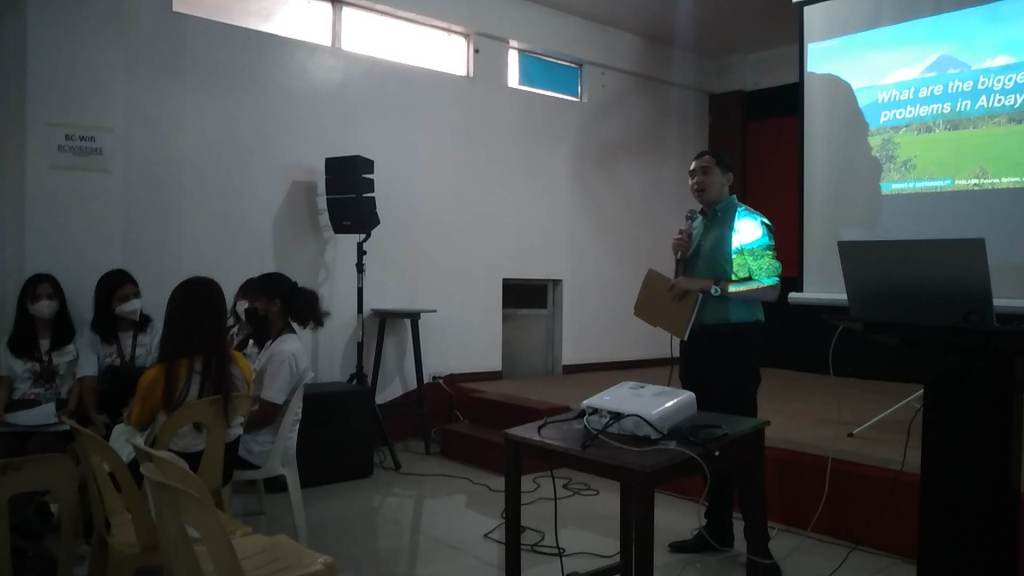
To circle back to the event sub-theme “Futures, Options, and Forwards”, Payonga led a quick “Future Design” activity in which students laid out the problems and needs they foresee for the next generation of Albayanos, and suggested ways through which those can be addressed preemptively in the next 20 years. Common themes that emerged were on governance, education, healthcare, transportation, agriculture, and livelihood. The activity was based on research by Osaka University Professor Keishiro Hara, who personally facilitated a similar activity in one of the classes attended by Payonga in graduate school. A separate article on students’ outputs will be published in the coming days!


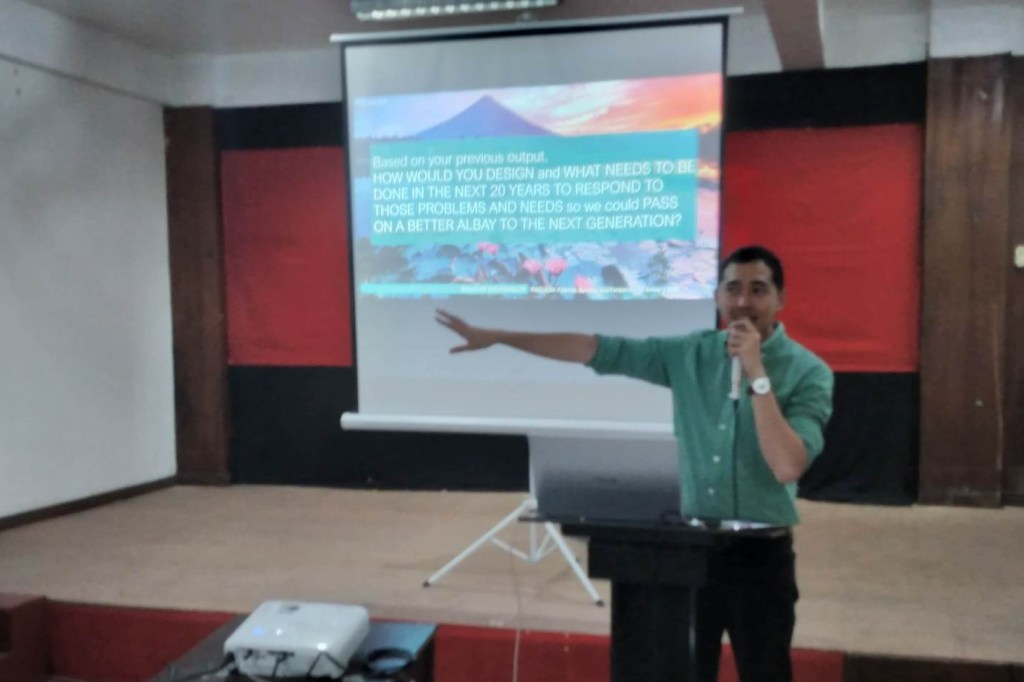

Students write their impressions about the next generation and share their thoughts on how to better design the future of Albay. Photos courtesy of Mr. Arman Bueno / Bicol College Senior High School Department and Rjay Torres Redoblado / The Bicol Centrale.
After the event, Payonga met with and thanked school authorities Dr. Maricar Magcalen, Coordinator of the Senior High School Department, Ms. Violeta Bejo, Principal for Basic Education, and Dr. Pedro Marcellana III, Executive Vice President. The talk was an opportunity for Payonga to advance his advocacy of instilling intergenerational concerns such as sustainability to the youth – the leaders of the next generation.
Finally, Payonga extends his gratitude to Mr. Bueno, the event organizers and teachers, and most especially the students who candidly and energetically participated in the lecture-workshop!


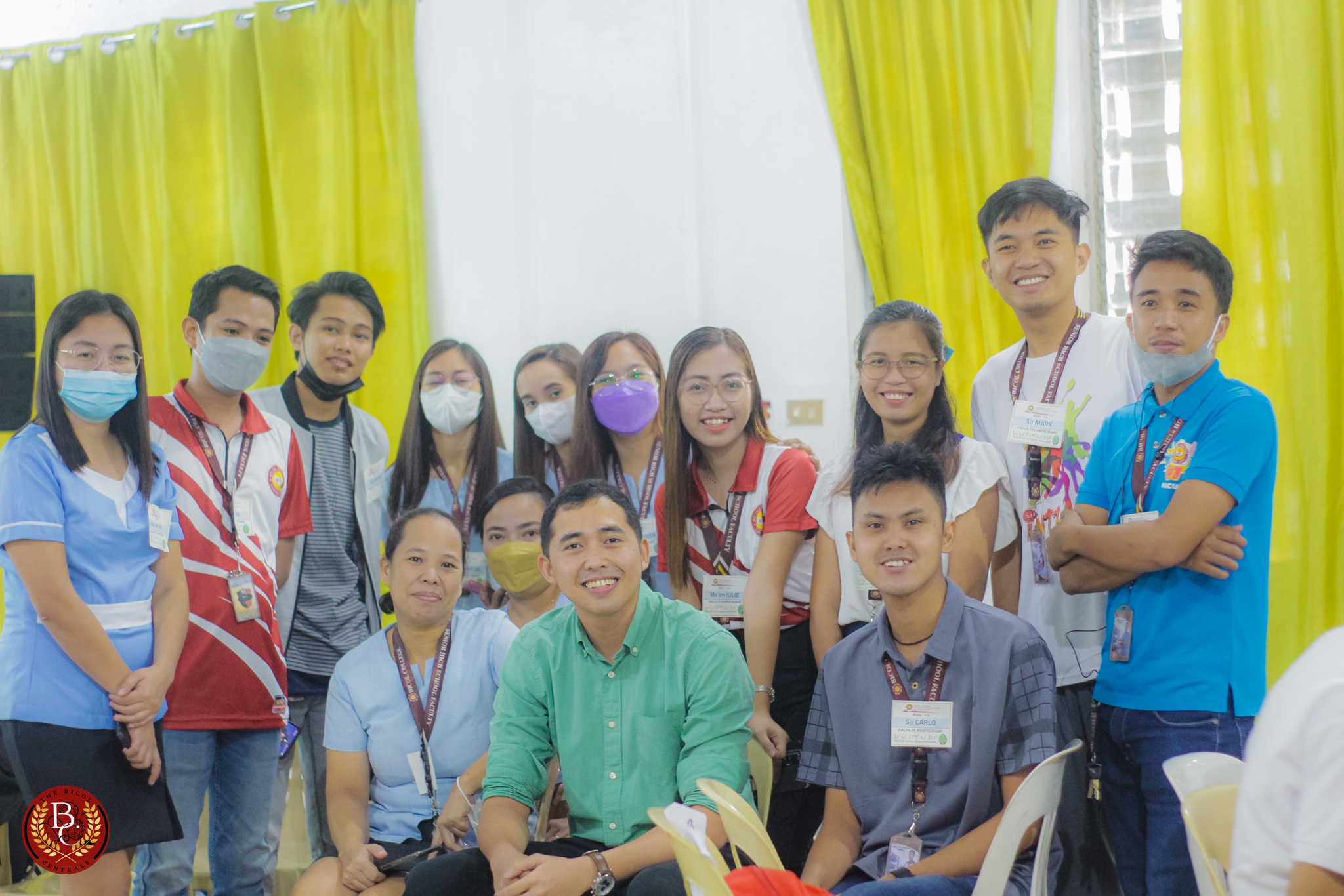


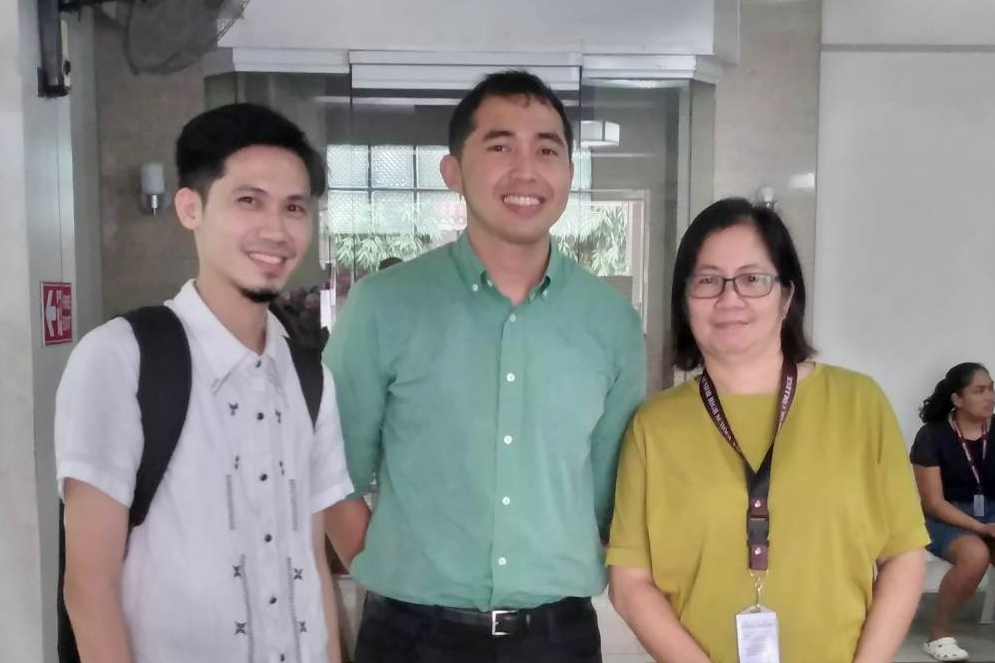

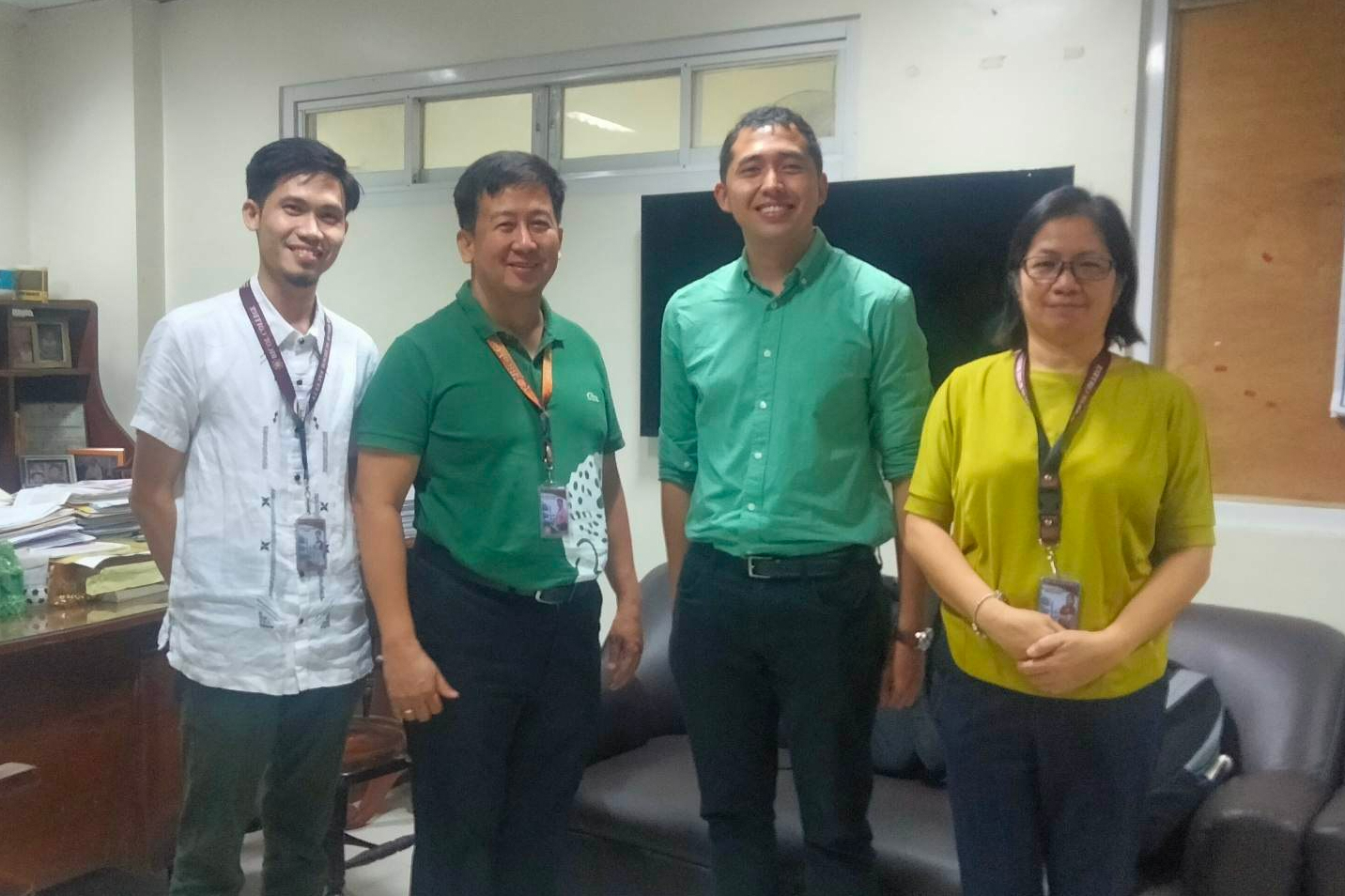

Photos courtesy of Mr. Arman Bueno / Bicol College Senior High School Department and Rjay Torres Redoblado / The Bicol Centrale.
 Enzo Payonga